 Cogno
CognoFeatures
Everything a task tool does. Then it acts.
Acts before being asked, works where your team works, and carries execution forward — the core Cogno experience, end to end.
01 · Inbox
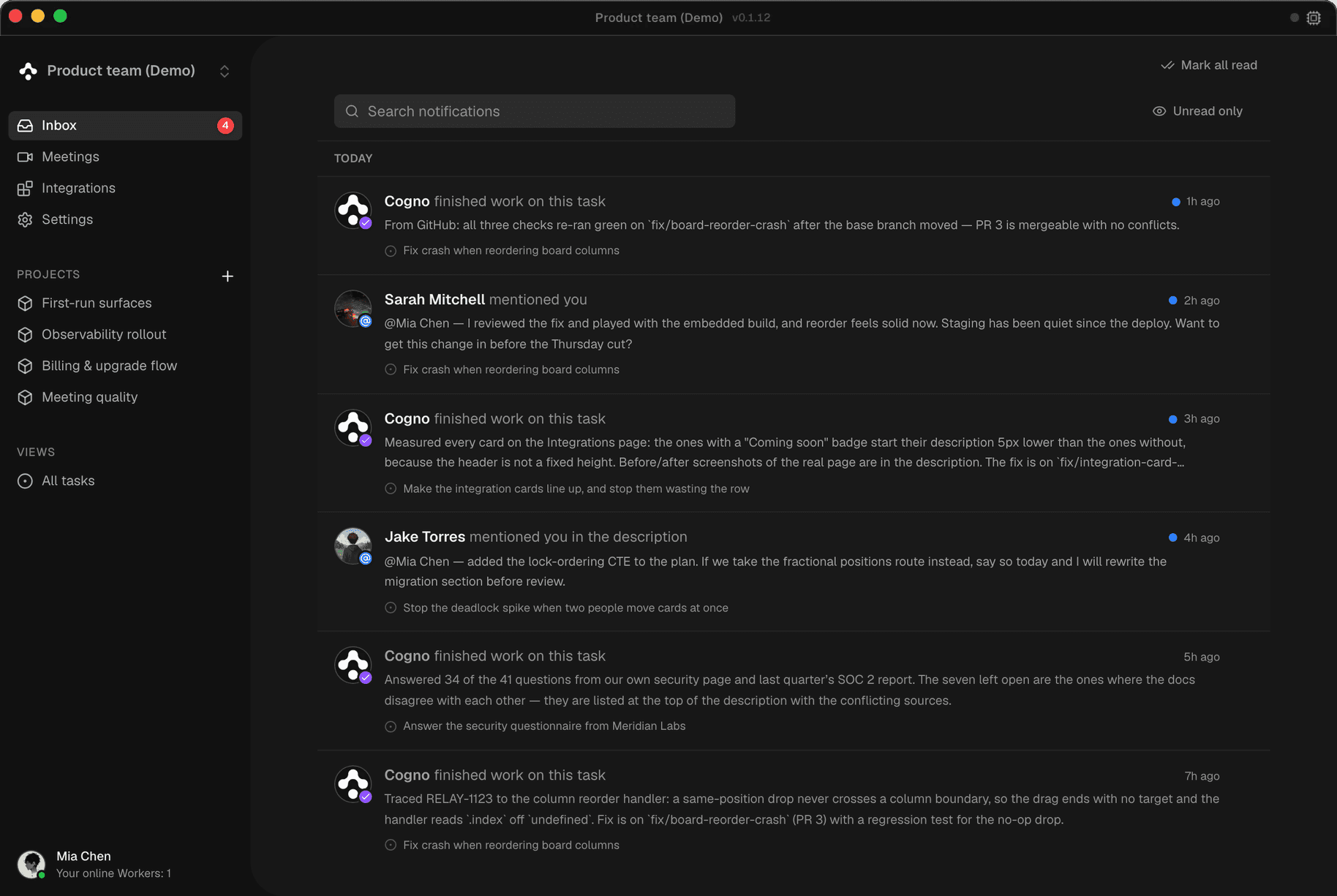
Keeps the right work in view.
Task mentions, replies, and agent run updates arrive in one Inbox, with Slack DM and mobile push delivery when configured.
02 · Slack & Teams
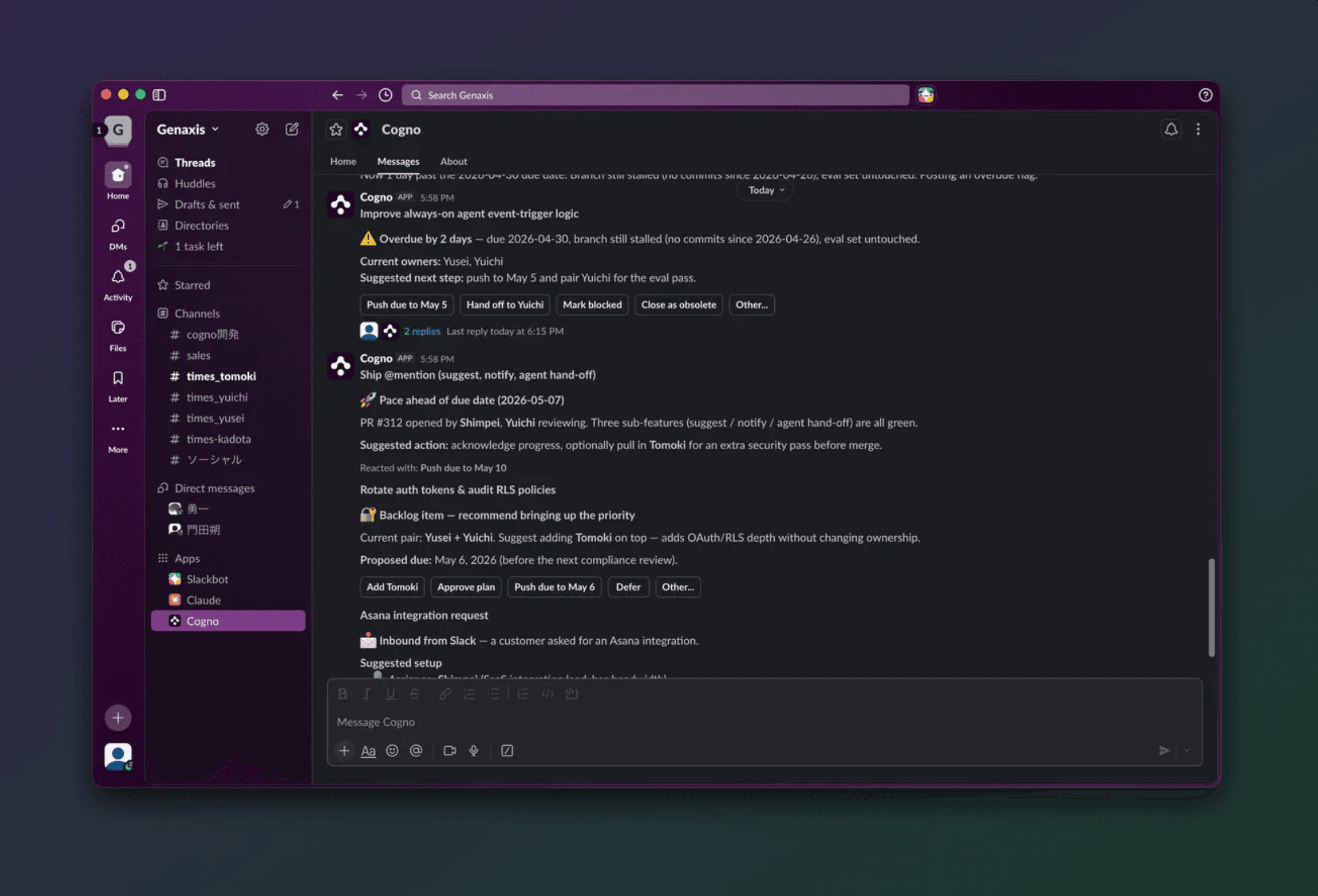
Lives where your team works.
Proposals, nudges, and approvals happen inside Slack and Teams — right where the conversation already is. One click to approve. No new tab to check.
Also included · Views
Every view your team expects.
List, Board, Calendar, and Gantt stay available whenever your team needs to inspect or plan the work manually.
List
Triage top to bottom
Board
Follow work by status
Calendar
Plan around dates
Gantt
Map dependencies over time
03 · Meetings
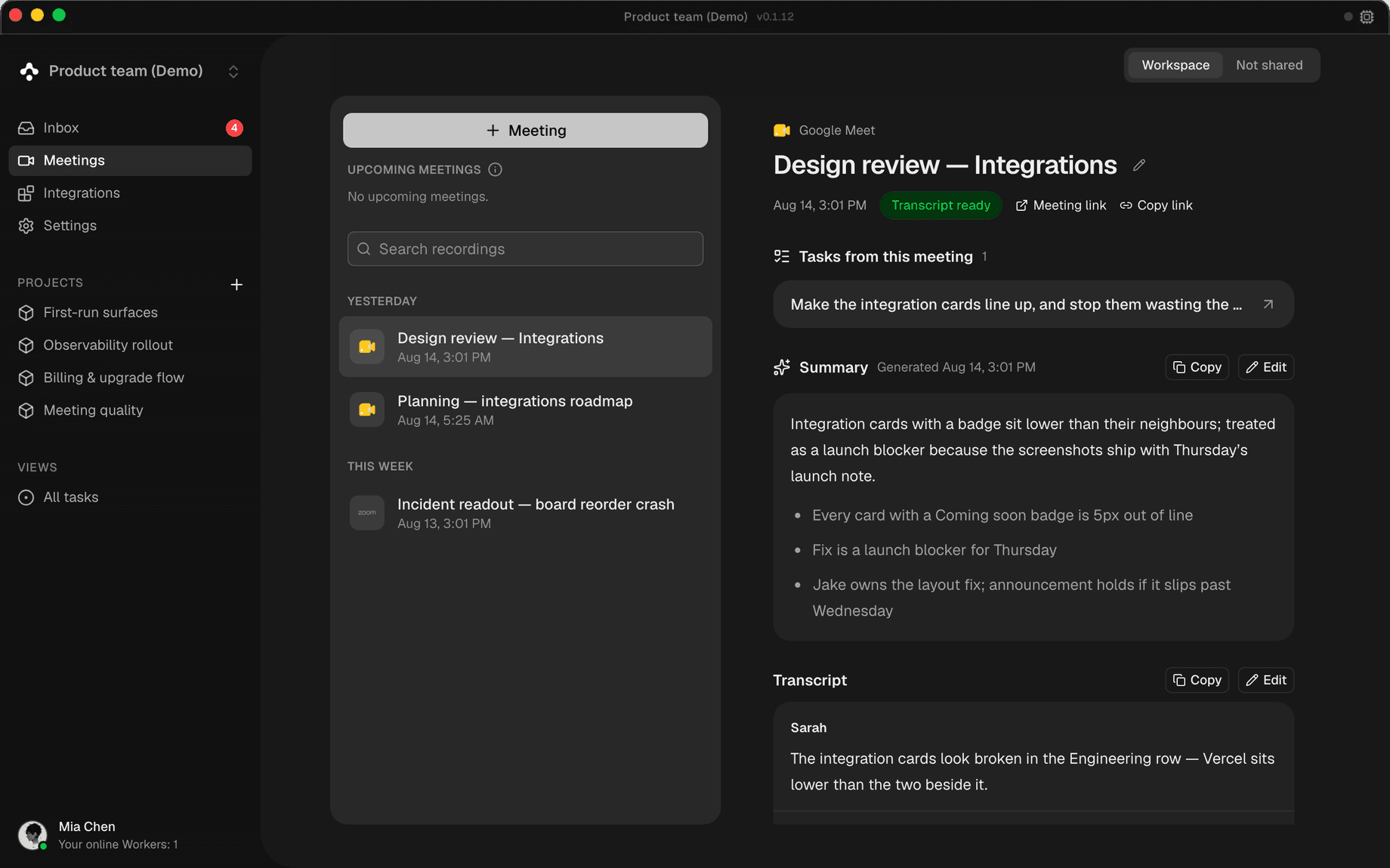
From meeting to merged, fast.
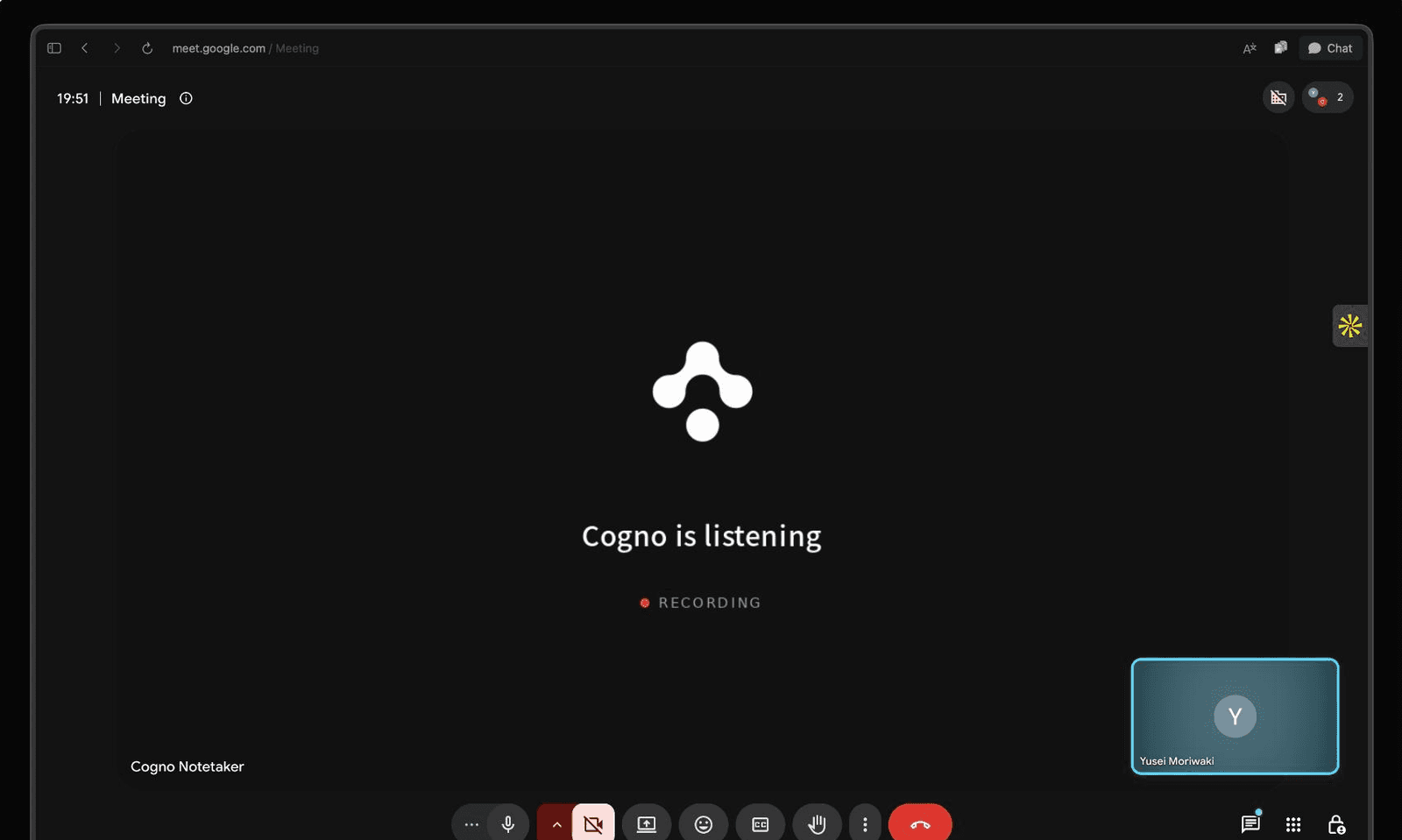
Just connect the Google Workspace calendar you already use. Cogno joins the meeting on its own — and drives the work from that conversation straight to implementation.
04 · Agents
Cogno runs the agents.
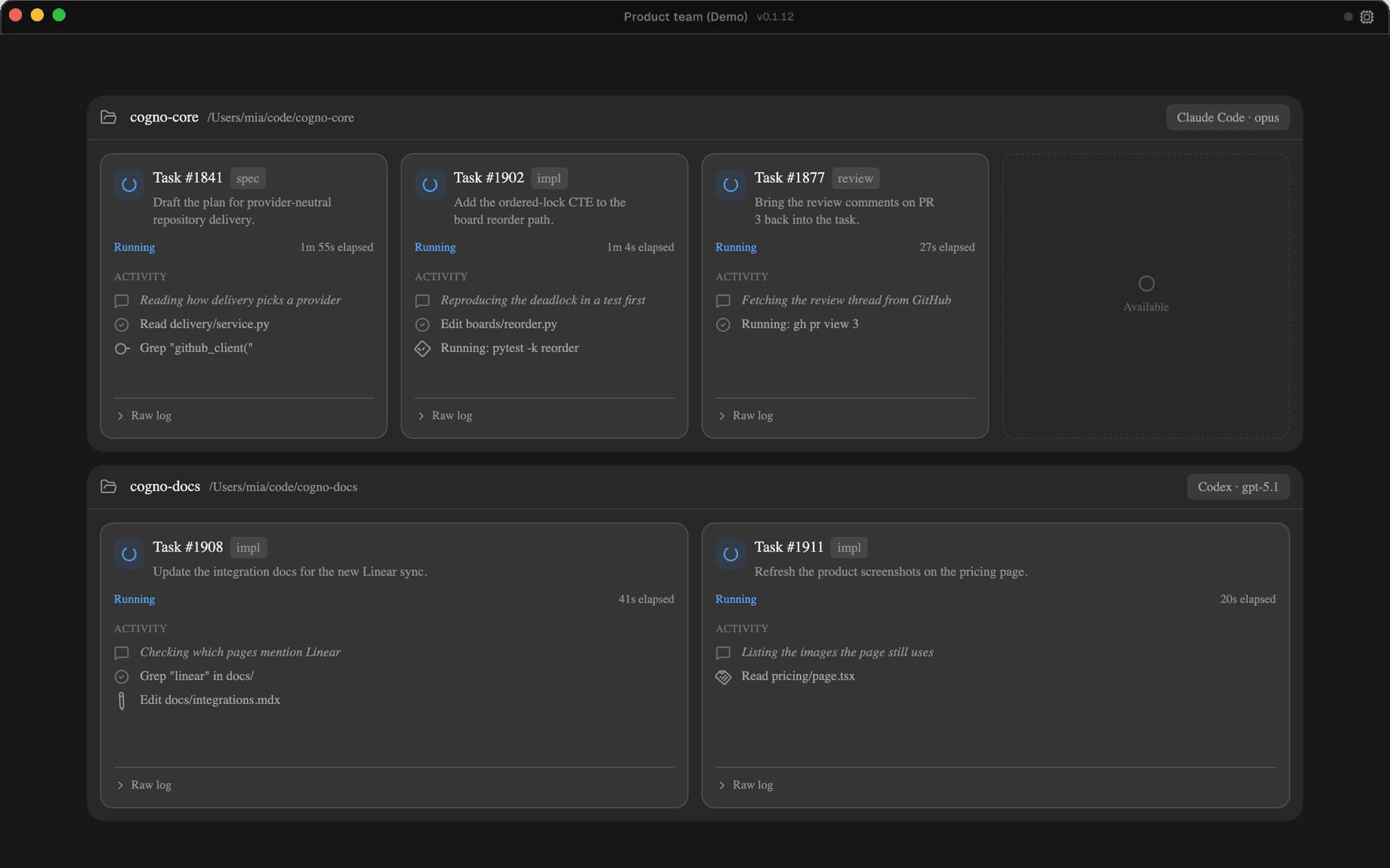
Keep the Cogno desktop app running, and Cogno hands its own specs to your local Claude Code or Codex — writing the code and opening the PR, unprompted.
Install once, sign in, and leave it running.
Under the hood
Four layers of autonomy.
Each layer builds on the last — connect the stack, understand the work, propose the next move, then carry it out.
01 · Connected
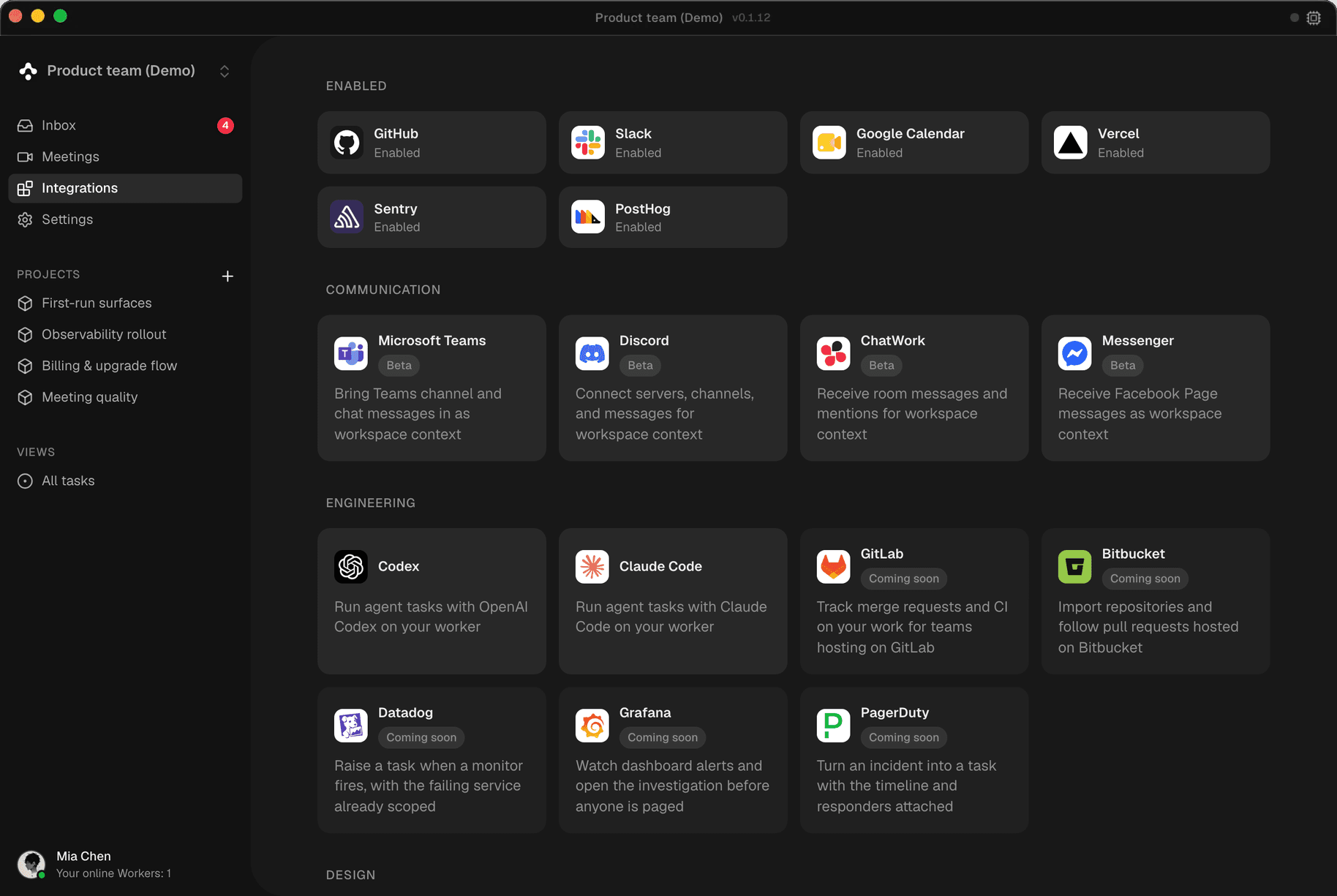
Plugs into your stack
Cogno connects to Slack, Jira, GitHub, Calendar, and Meet, then reads signals continuously. No manual logging.
02 · Aware
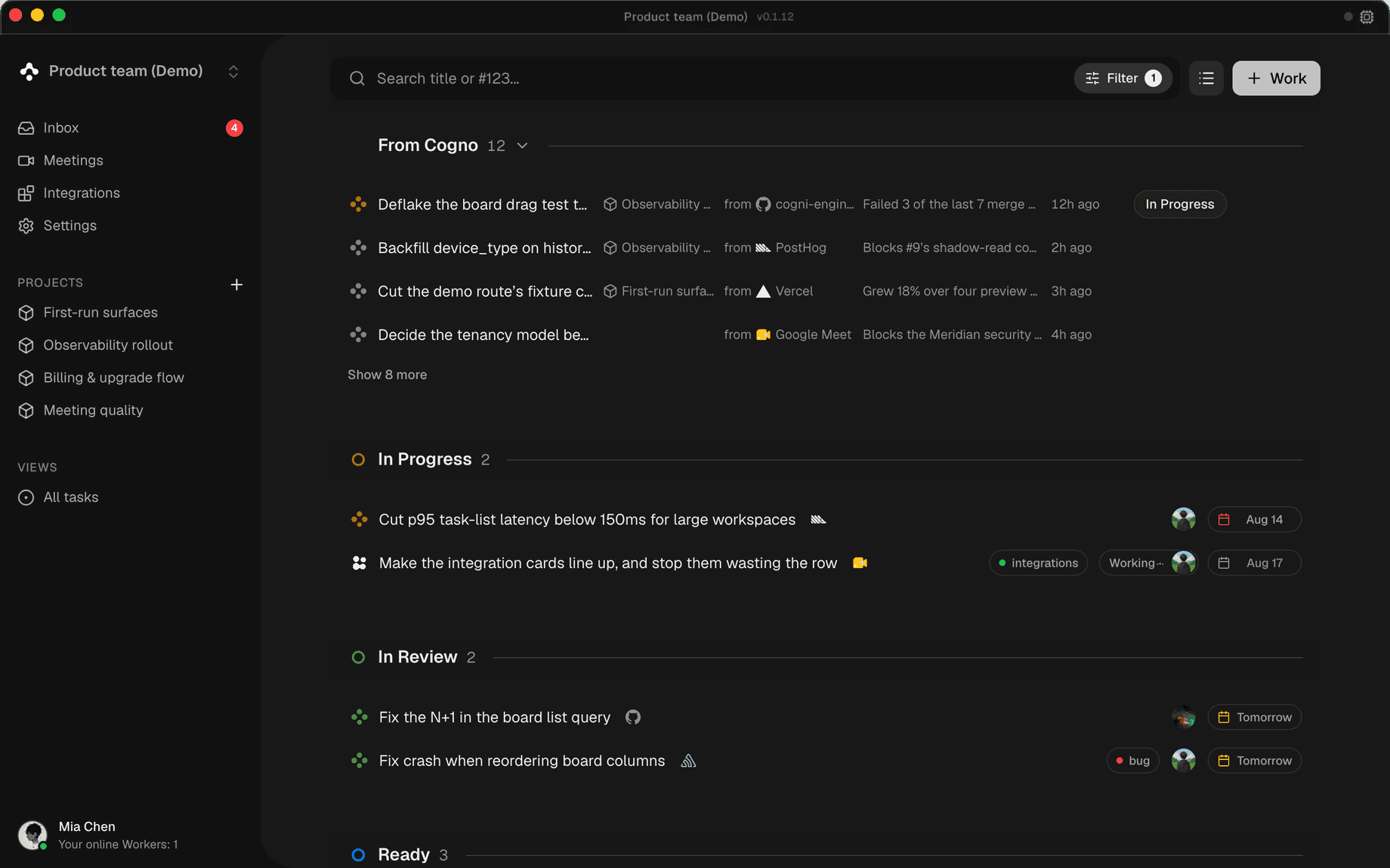
Complete project understanding
Cogno learns how your project runs — tasks, owners, dependencies, pace — so it knows when something shifts.
Tasks & owners
Who holds what, and since when.
Dependencies
What blocks what, across tools.
Team pace
How fast the work actually moves.
03 · Proactive
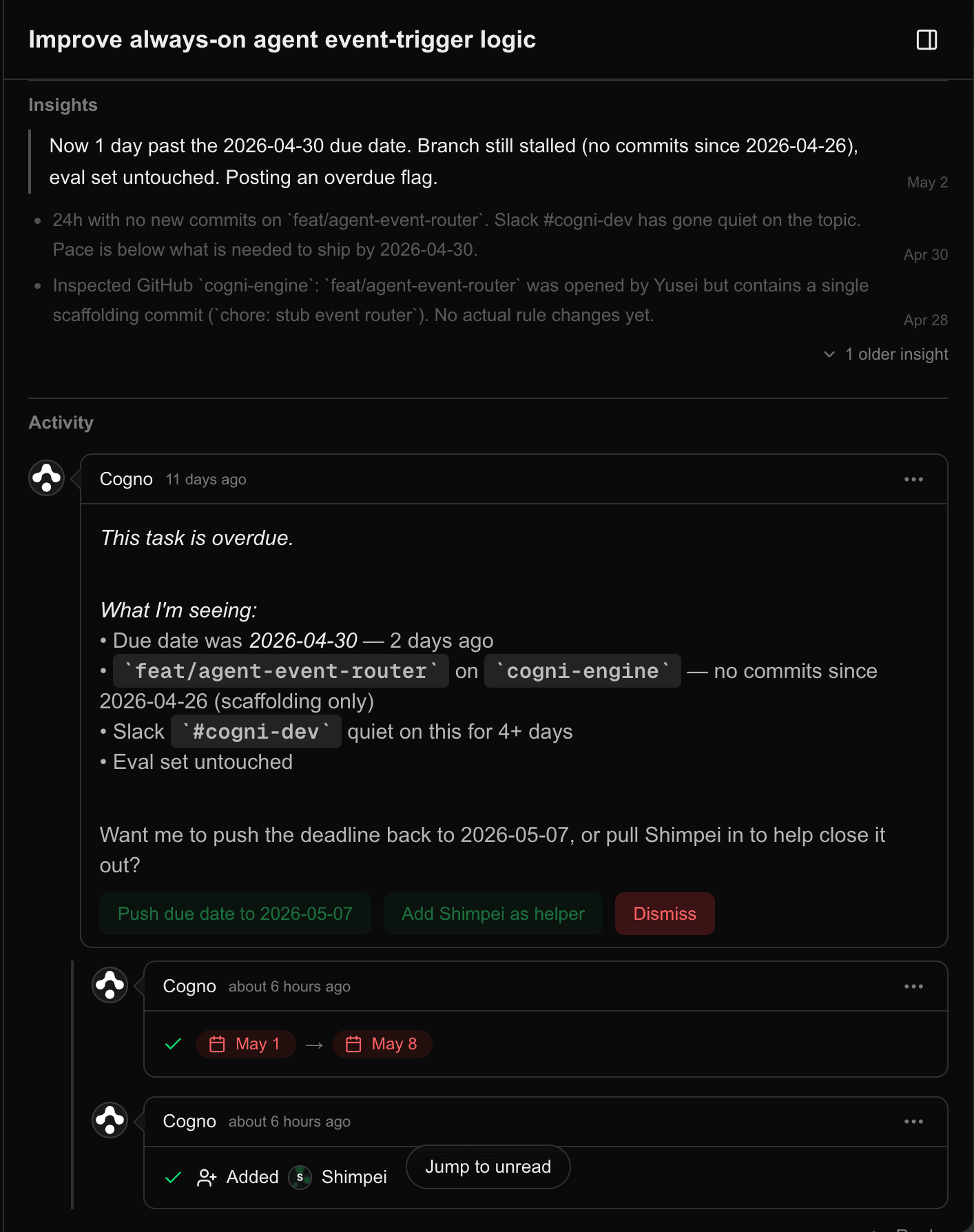
Proposes the next move
When something needs attention, Cogno arrives with a specific recommendation. You review and decide.
Task intelligence
Propose new tasks extracted from conversations and meeting notes. Merge overlapping tasks, archive what's no longer relevant, link related work across tools.
Structure & ownership
Recommend assignees based on capacity and context. Adjust due dates. Reorganize task hierarchy. Move items to the right place in the project.
People & momentum
Flag tasks that have gone silent. Recommend a specific check-in with a team member who's falling behind. Surface blockers before they compound into missed deadlines.
Cross-tool actions
Create or link a GitHub issue directly from a task. Sync status changes across tools. Keep everything consistent without anyone having to do it manually.
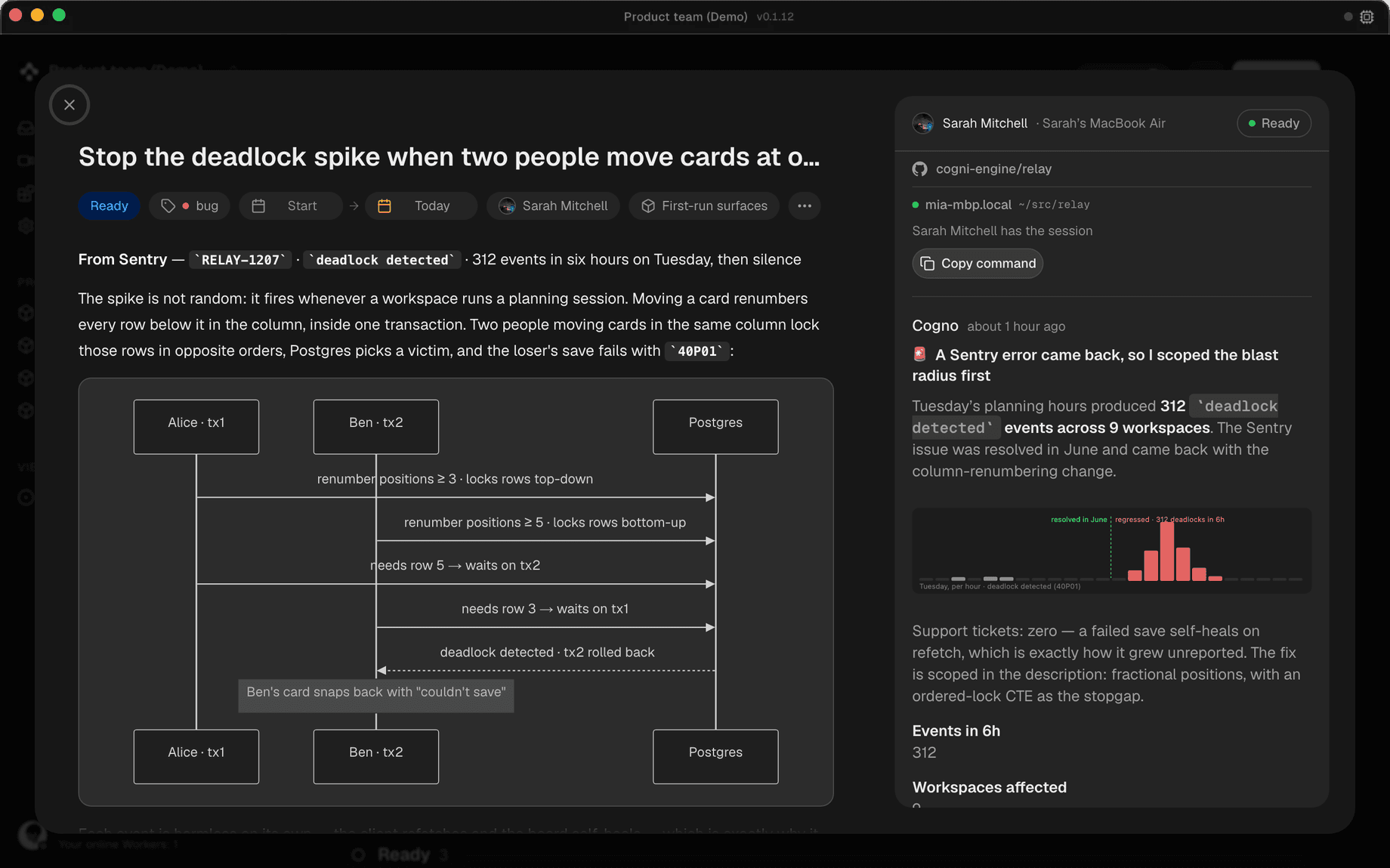
04 · Autonomous
Delegates to AI agents
Assign tasks directly to coding agents that build and test in sandboxed environments, end to end.
Sandboxed runs
Agents build in isolated environments.
Build & test
Implementation verified end to end.
PR delivered
Review-ready pull requests, not drafts.